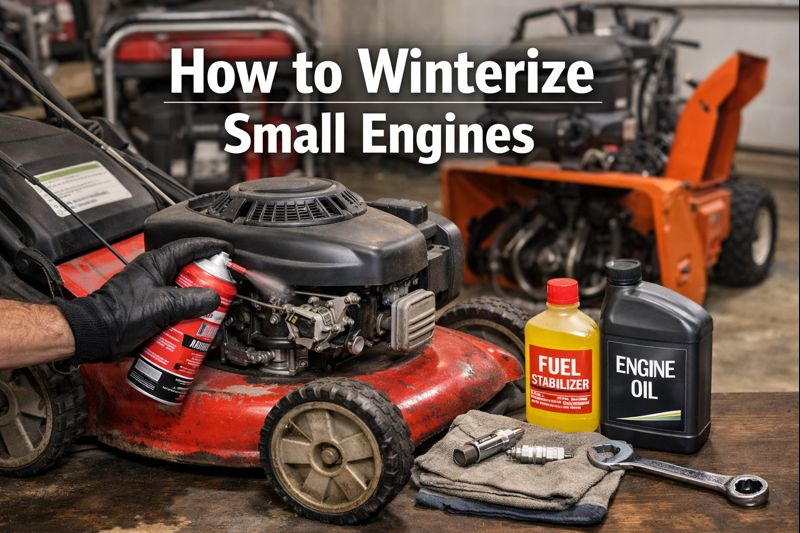
This guide will walk you through the process of properly winterizing small engines such as lawn mowers, snow blowers, generators, or other seasonal equipment. Following these steps will help prevent fuel system issues, corrosion, and hard starting when the engine is put back into service.
Why Winterizing Matters
Modern gasoline contains light compounds that evaporate over time, leaving behind varnish that can clog carburetors and fuel passages. Ethanol-blended fuels make this problem worse by attracting moisture. Proper winterization prevents these issues and extends the life of your engine.
What You’ll Need
- Fuel stabilizer (even if the fuel contains no ethanol)
- Engine oil
- Fogging oil spray
- Spark plug socket (rubber insert preferred, but not required)
- Basic hand tools
I use this fogging oil spray. It’s inexpensive and widely available at places like Walmart.
Step 1: Change the Oil
Changing the oil before storage removes contaminants and acids that can damage internal engine components over time.
- Drain the old oil
- Refill with the correct type and amount of fresh oil
Step 2: Drain the Fuel Tank
If the fuel is not stabilized, drain all gasoline from the tank completely.
If the fuel is stabilized, drain most of it, leaving just enough to run the engine briefly in the next step.
Step 3: Run the Engine on Stabilized Fuel
Add a small amount of stabilized fuel back into the tank — just enough to let the engine run for about one minute.
- Start the engine
- Let it run briefly so stabilized fuel reaches the carburetor
Step 4: Fog the Engine
While the engine is running and beginning to run out of fuel:
- Spray fogging oil directly into the carburetor or air intake
- Continue spraying until the engine chokes and shuts off
This will create a lot of smoke — this is normal. Fogging oil coats internal engine components and protects them from corrosion.
Step 5: Fog the Cylinder
- Remove the spark plug
- Spray a short burst of fogging oil directly into the cylinder
If you have a spark plug socket with a rubber insert, it helps hold the plug securely. If not, a regular socket works fine — just be gentle to avoid cracking the ceramic.
Step 6: Reinstall the Spark Plug
- Reinstall the spark plug
- Tighten it snugly (do not overtighten)
Step 7: Distribute the Oil
Slowly pull the starter cord slowly or rotate the engine crank a few times by hand. This helps distribute the fogging oil inside the cylinder.
Step 8: Store the Engine
Your engine is now ready for storage.
- Store it in a dry location
- Cover it to keep dust and moisture out
Following these steps will make starting your engine next season easier.